
Air Force, Space Force seek $16B extra for FY26 ‘unfunded priorities’
The services’ unfunded requests, obtained by Breaking Defense, reflect sharp increases compared to last year.
The services’ unfunded requests, obtained by Breaking Defense, reflect sharp increases compared to last year.
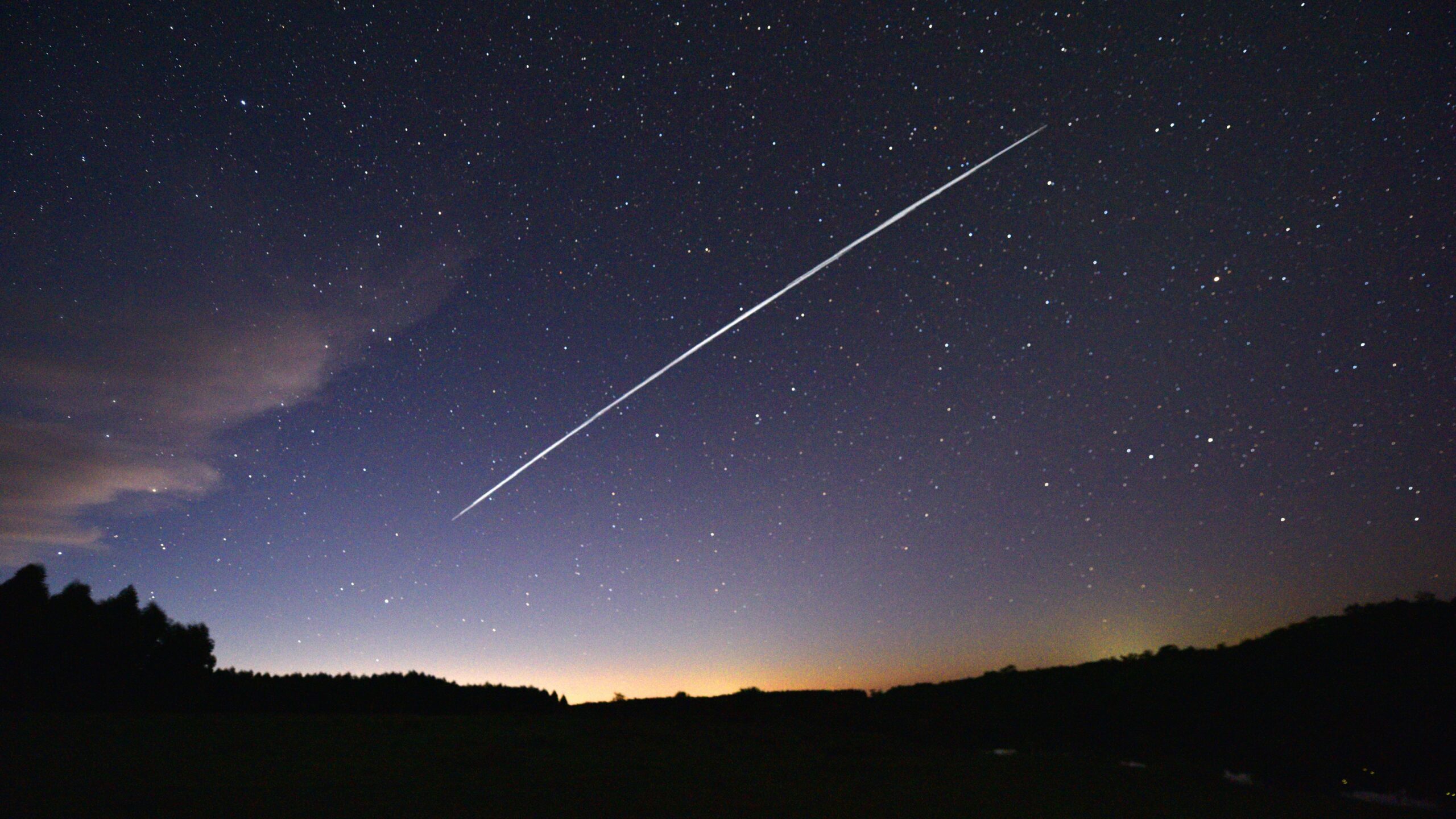
The MILNET contract with SpaceX is being paid for by the Space Force but managed by the National Reconnaissance Office, sources said.


Consolidate network monitoring, performance management, and fault isolation into a single, comprehensive solution.

There are a lot of hopes within DoD and the Space Force for Project Kuiper's success, with officials seeing the constellation as offering diversity beyond Starlink in the supplier base for so-called proliferated LEO services.

The report finds that Russia has been increasingly successful at blocking Ukraine's use of SpaceX's Starlink communications constellation, citing media reports in December 2024 about a new system specifically targeting Starlink called Kalinka and developed by the Russian Center for Unmanned Systems and Technologies.
The All-domain Anomaly Resolution Office report reveals that the GREMLIN sensor suite for detecting, tracking and characterizing UAP was successfully used in March, and next will be deployed to undertake a 90-day "pattern of life" campaign at an unnamed national security site.


Ground platform situational awareness is critical as vehicle crew survivability depends upon it.


Cybersecurity skills must evolve in near-real time as Zero Day threats continue and AI provides new challenges.

Command posts that aren’t mobile are vulnerable to attack from electronic warfare and long-range drones.

The proposed framework is based on adapting the risk-based approach the international air traffic control system uses to manage airspace to prevent planes from colliding, said Kevin Toner, vice president of MITRE's Center for Government Effectiveness and Modernization.

Expeditionary forces jumping from island to island in the Indo-Pacific need a mobile way to command and control from vehicles, hotels, and homes.
The Space Force today circulated a fact sheet explaining what the service called a "proactive" and "collaborative" effort to keep tabs on Starlink re-entries as SpaceX begins to de-orbit some 100 early variants.


Blending superior optics, advanced stabilization and AI-powered autonomy in a compact and rugged system, ASELFLIR 600 delivers unmatched intelligence, surveillance and reconnaissance (ISR) capabilities.

“Requirements in the market are changing dramatically thanks to Elon Musk and SpaceX,” Aaron Brosnan, president of Thales subsidiary Tampa Microwave, said in an interview.

“Right now, you and I can go to a Cabela’s, we can buy a radio, we can go to a trade show, put it out on a table, and we can say it's a form of resilient communication, because there's no standard,” Samir Mehta said. “It's time that we have a standard.”

Space industry analyst Todd Harrison said the $3.1 billion purchase is latest in a "shakeup" in the satellite communications landscape following the proliferation of LEO birds.
“Just the idea of this being more available and so people can find it and try to exploit it, that's something we just have to bake in and understand,” Assistant Secretary of Defense for Space Policy John Plumb said of commercial services like SpaceX’s Starlink constellation.